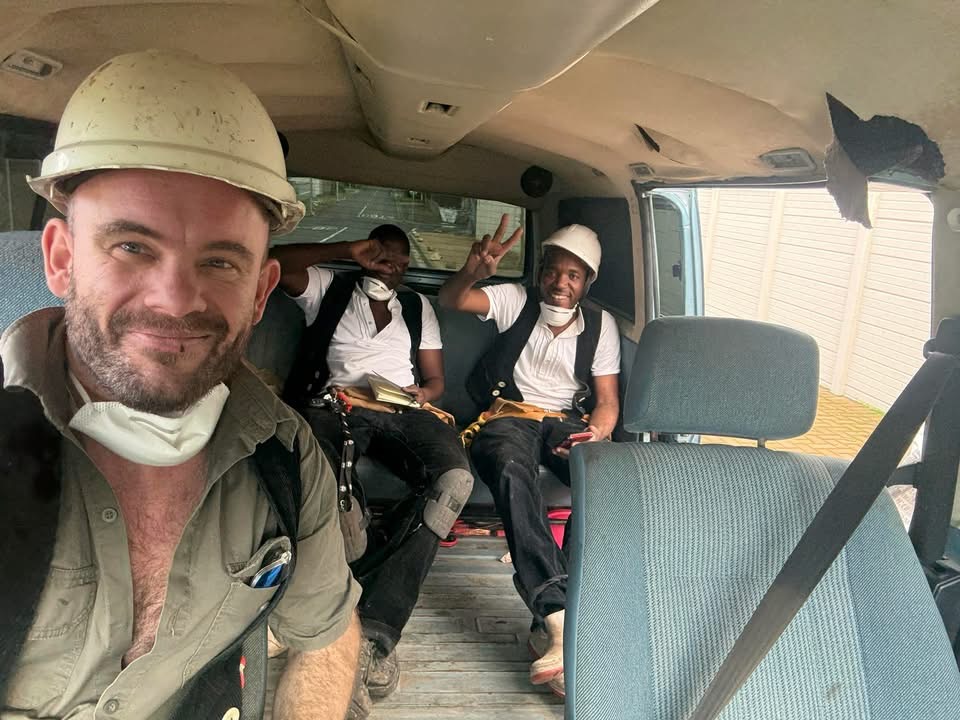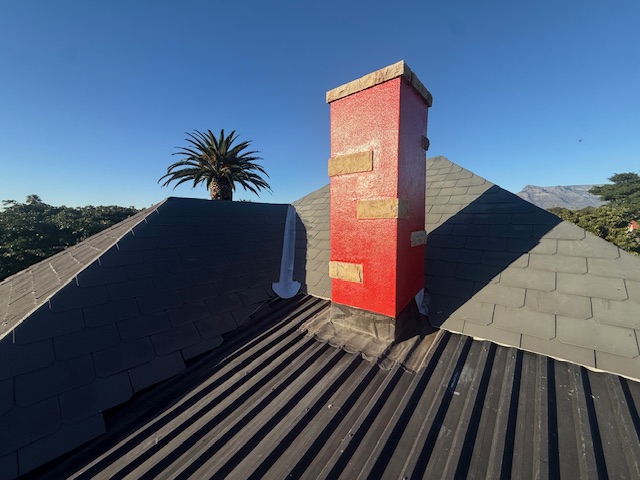
HeritageGuard Roofing Project - Partial Asbestos Roof Replacement Without Disturbing Remaining Sections
Successful Completion of Our First HeritageGuard Roofing Project
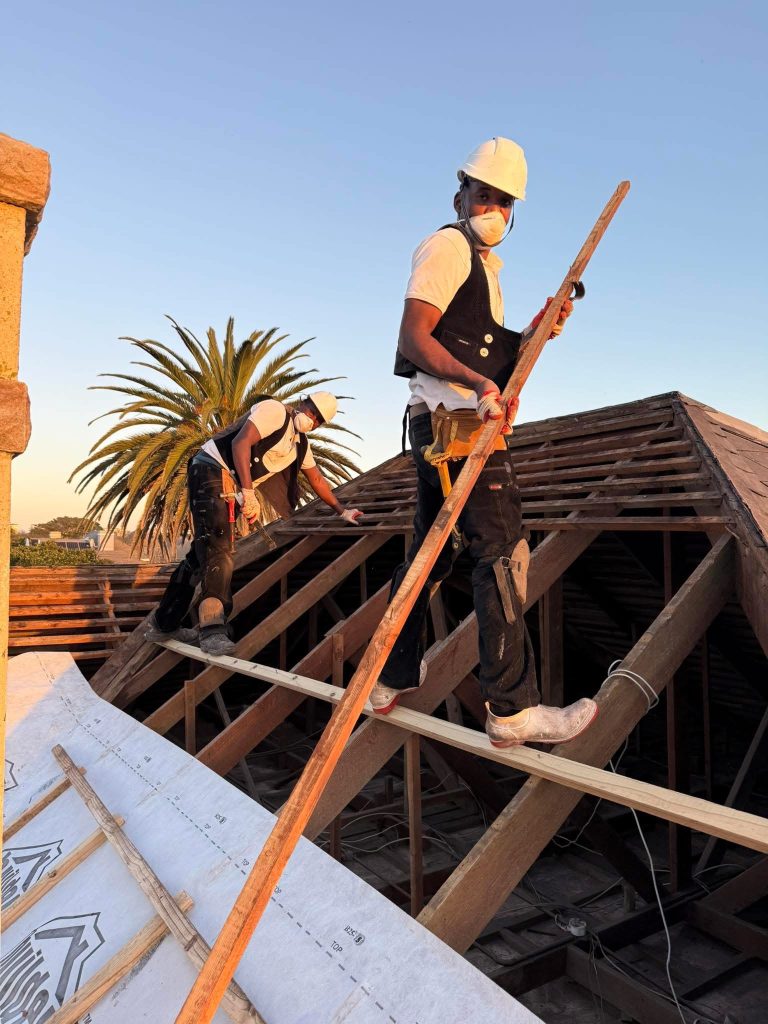
Two Sections — Safely Partially Replaced Without Disturbing Remaining Asbestos
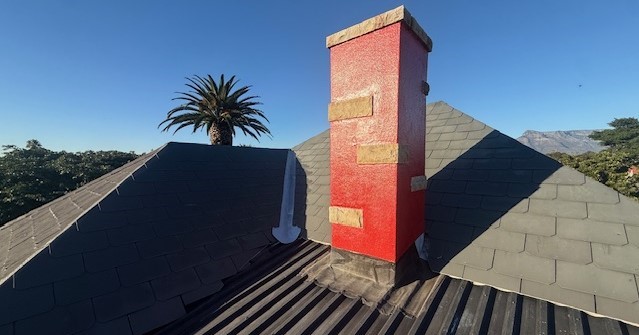
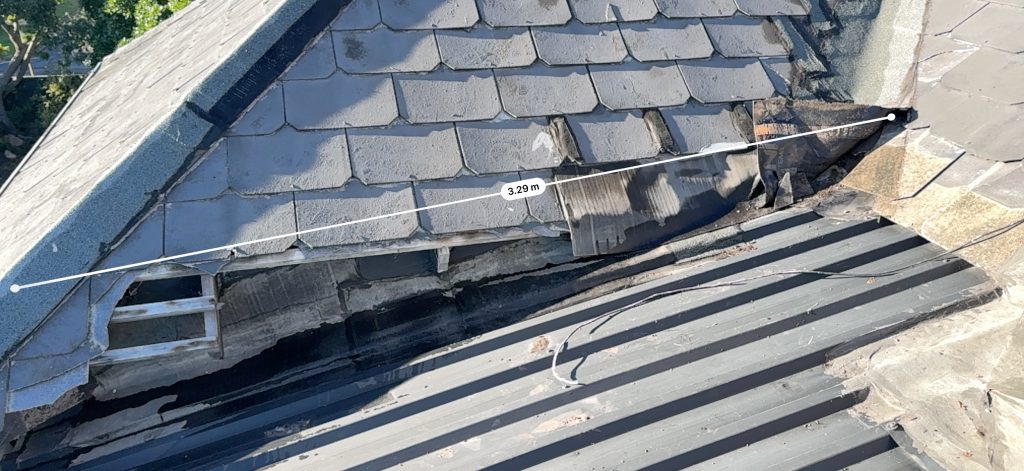
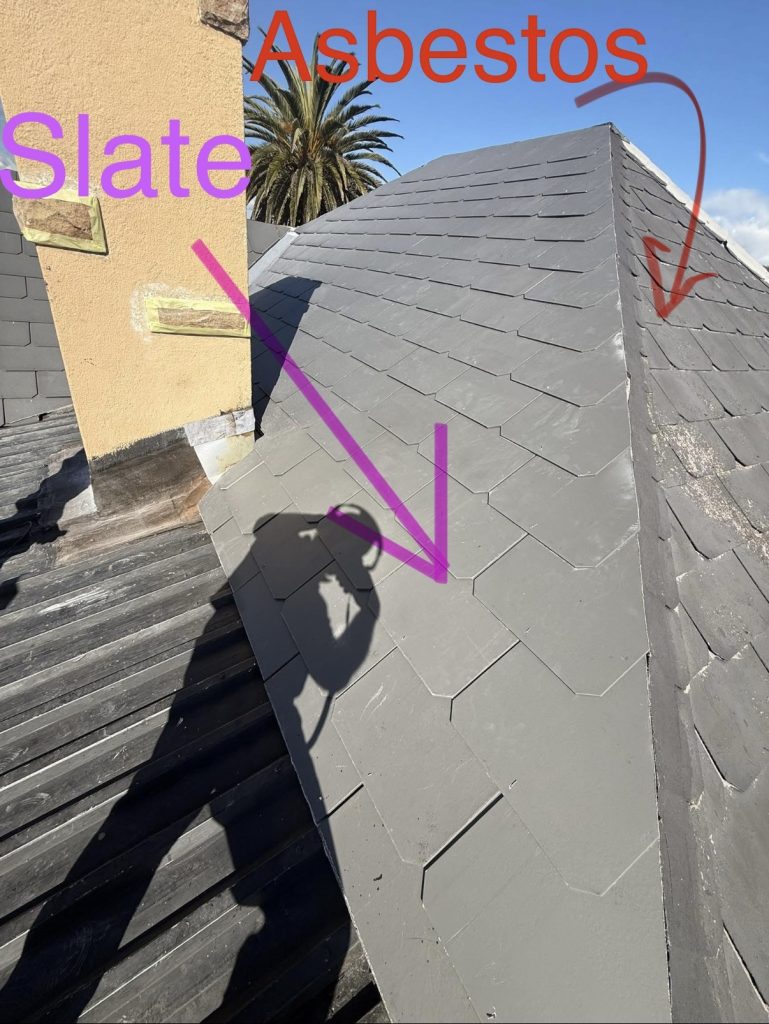
We are proud to announce the successful completion of our first HeritageGuard roofing project on two sections of a single-pitched roof. The work was executed in full compliance with the Amendments to the Asbestos Abatement Regulations, 2020 — specifically Regulation 24(j), which prohibits any installation or fitting on or onto asbestos-containing materials.
PROJECT HIGHLIGHTS
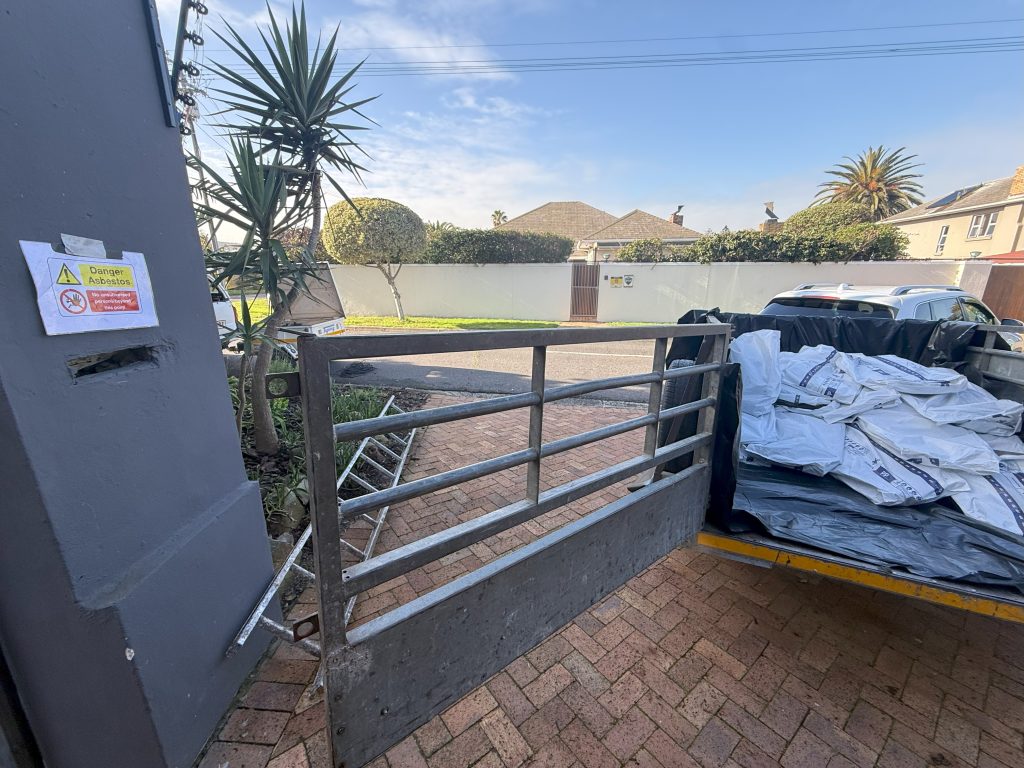
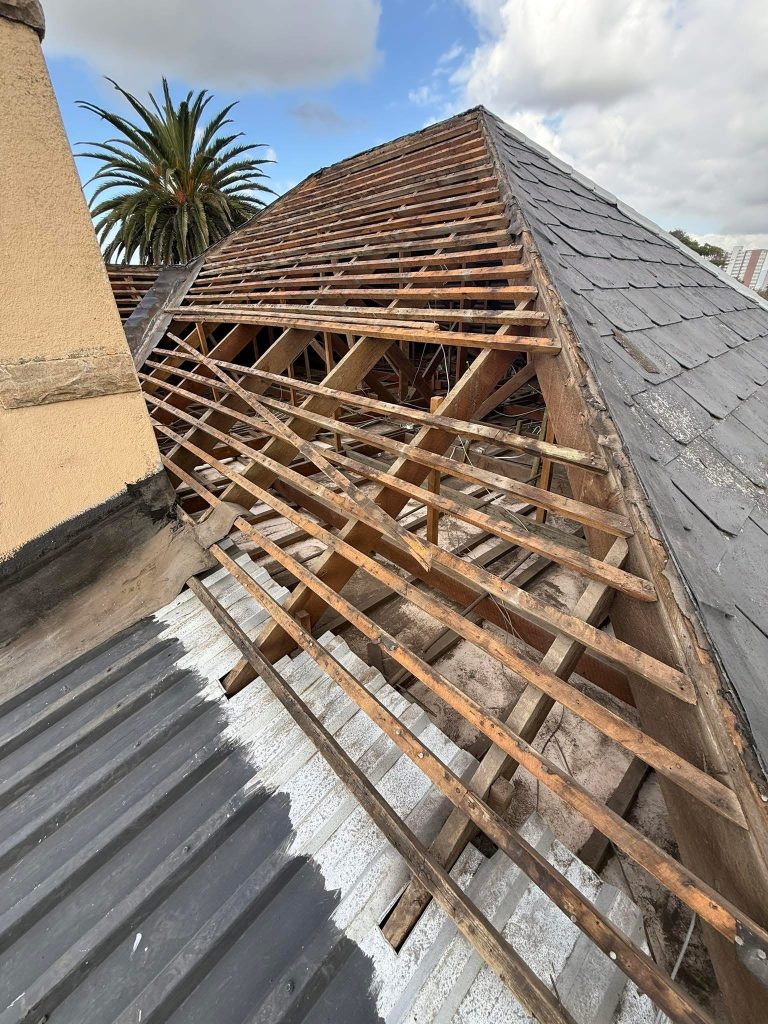
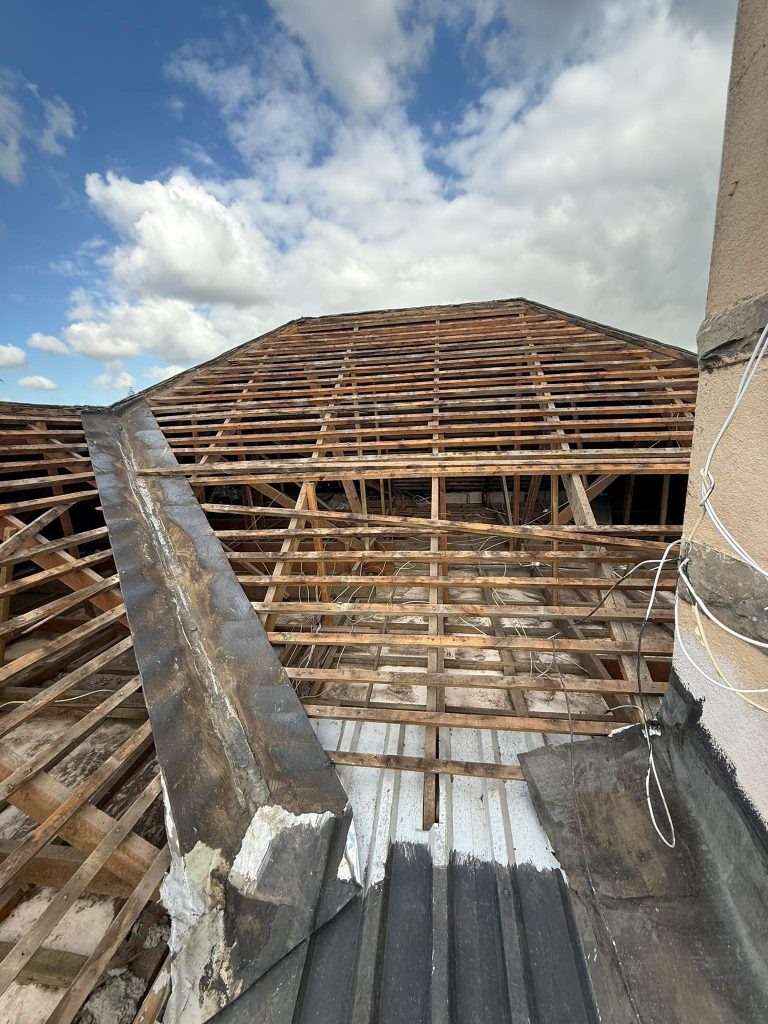
- Asbestos-containing sections were safely dismantled by a certified contractor accredited by AREM (Asbestos Removal & Environmental Management).
- The entire project was independently monitored by AIA (OHMS) — an Approved Asbestos Inspection Authority — to ensure full environmental and occupational safety compliance.
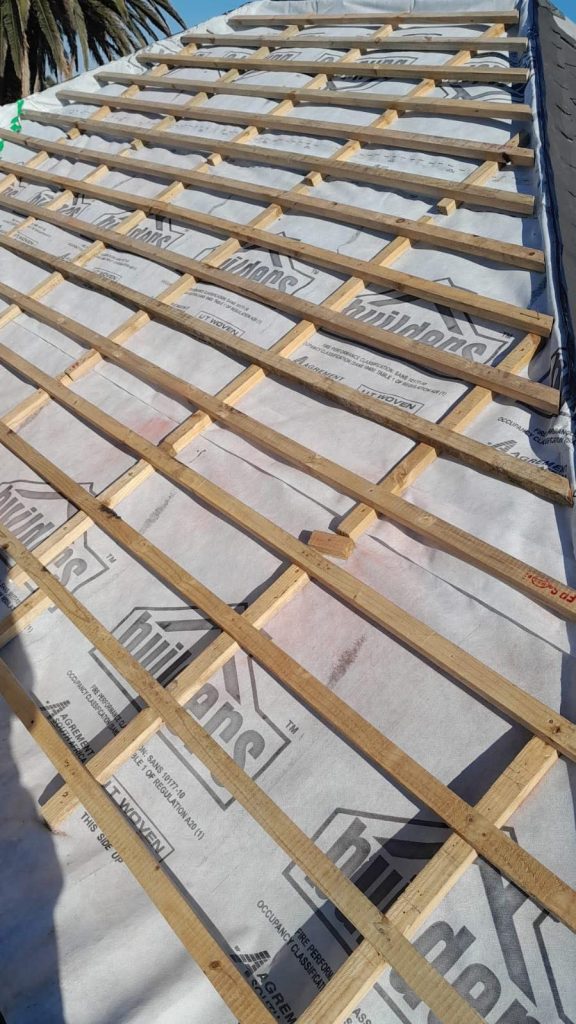
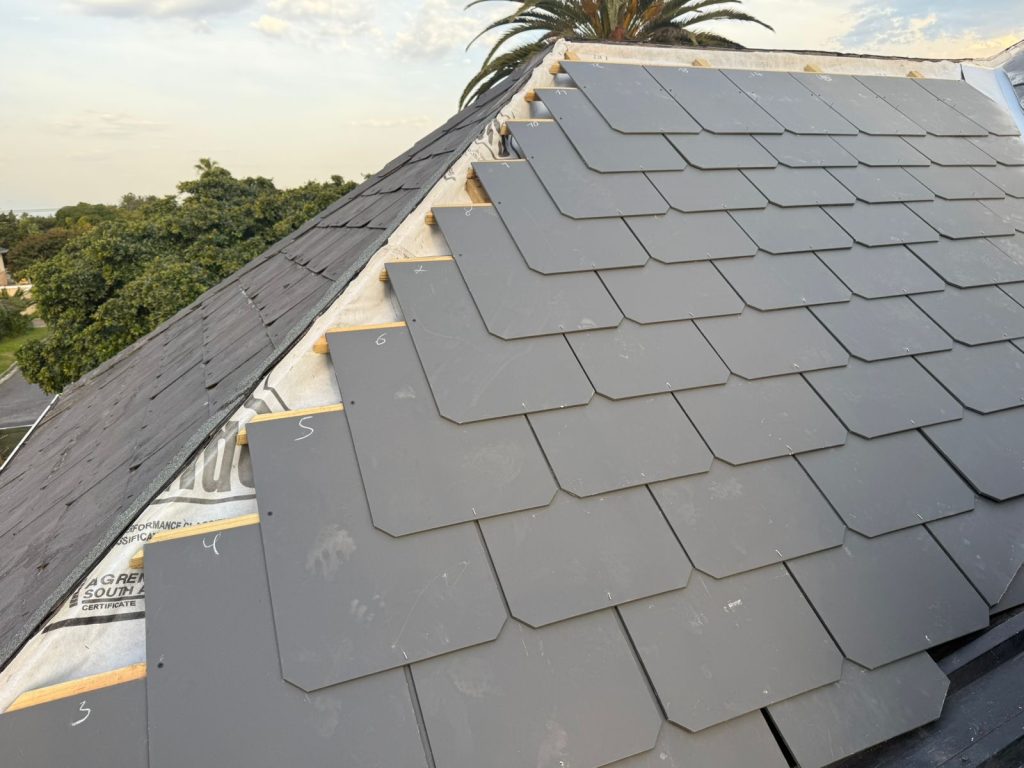
- New battens and high-performance underlayment membrane were installed.
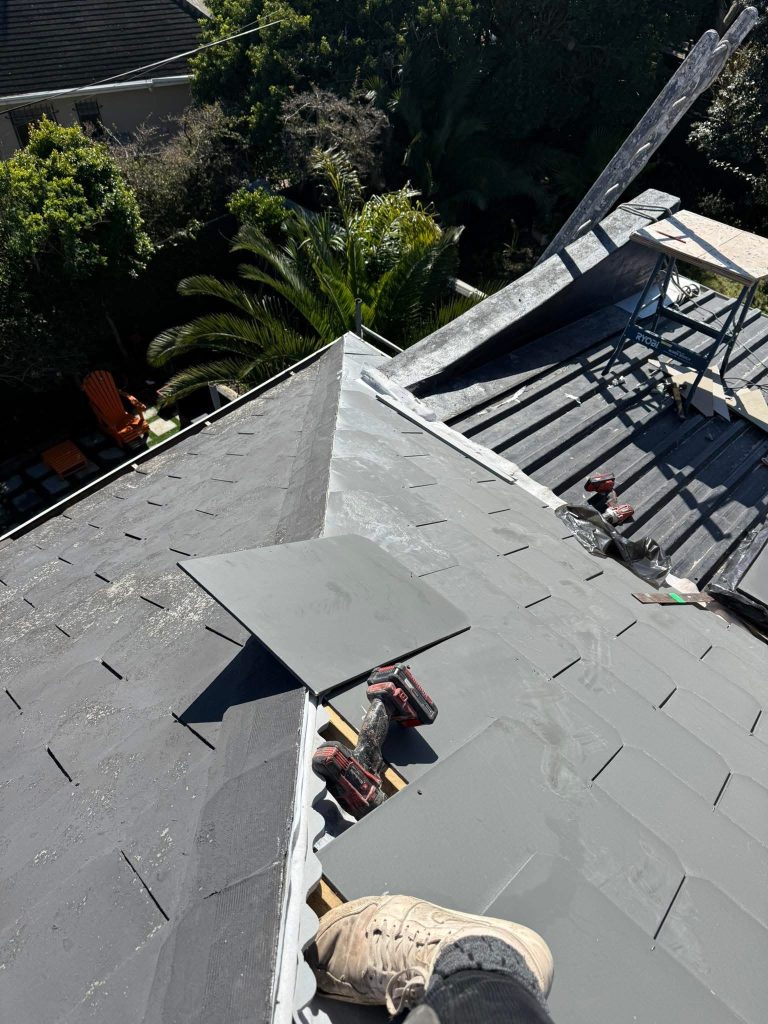
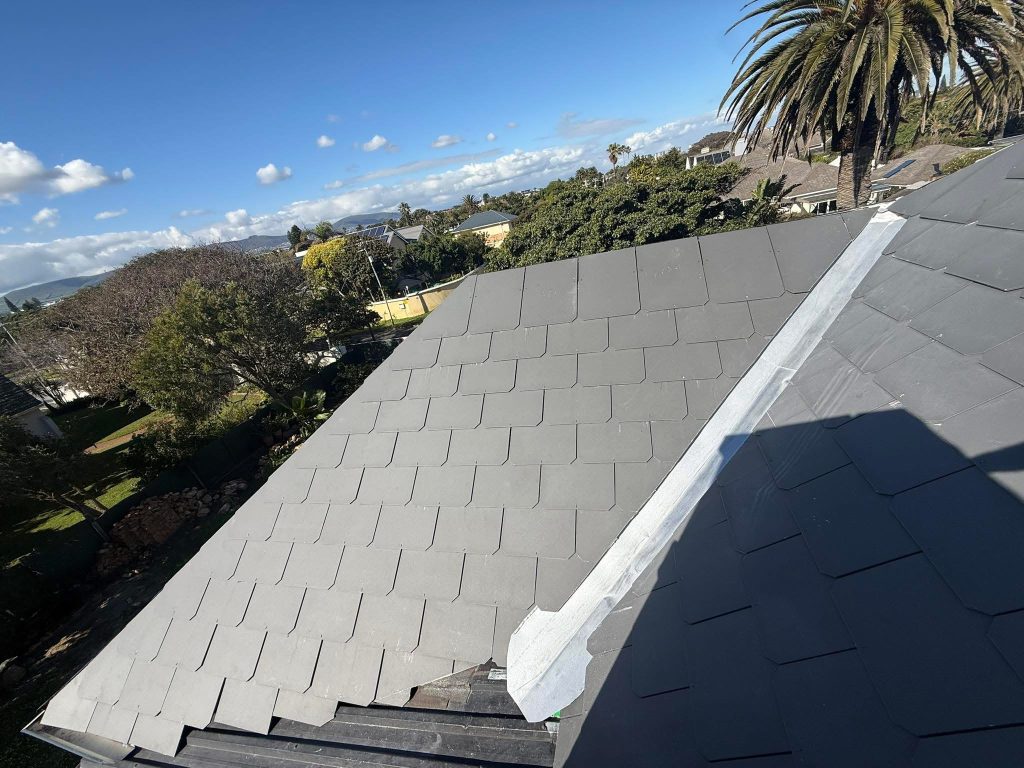
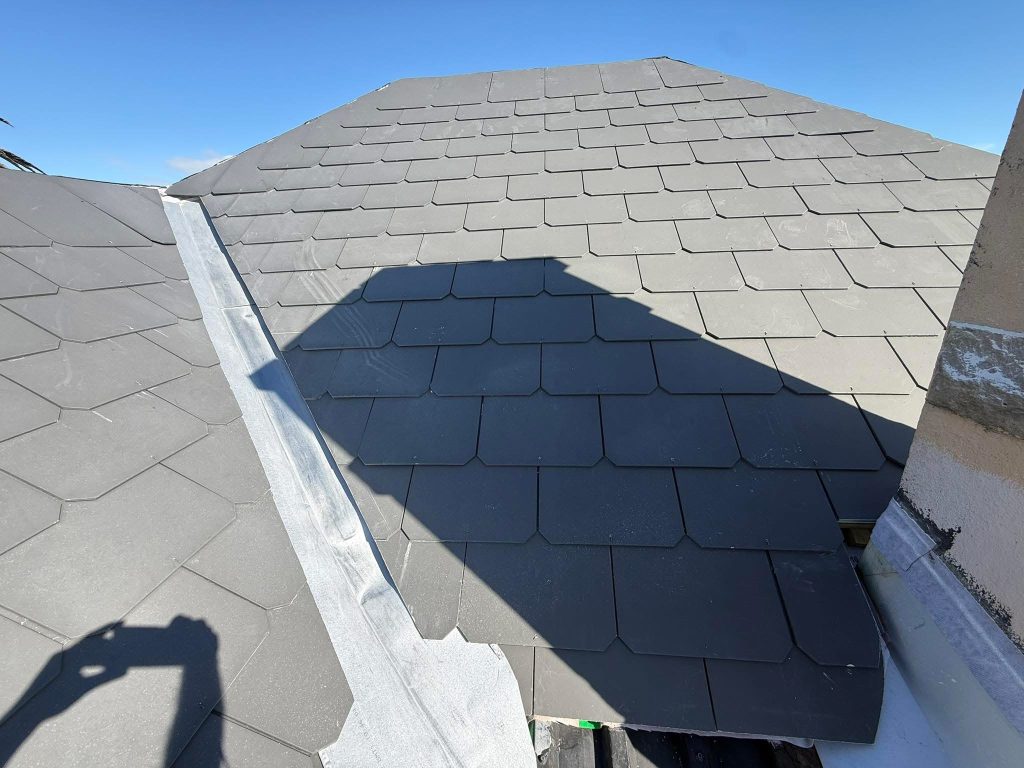
- The roof was reclad with fibre cement tiles to match the original appearance.
- All work was carried out using the proprietary HeritageGuard method developed by Daniel Kniess of The German Roofer
THE HERITAGEGUARD METHOD
The HeritageGuard Method – Partial Replacement with Zero Disturbance
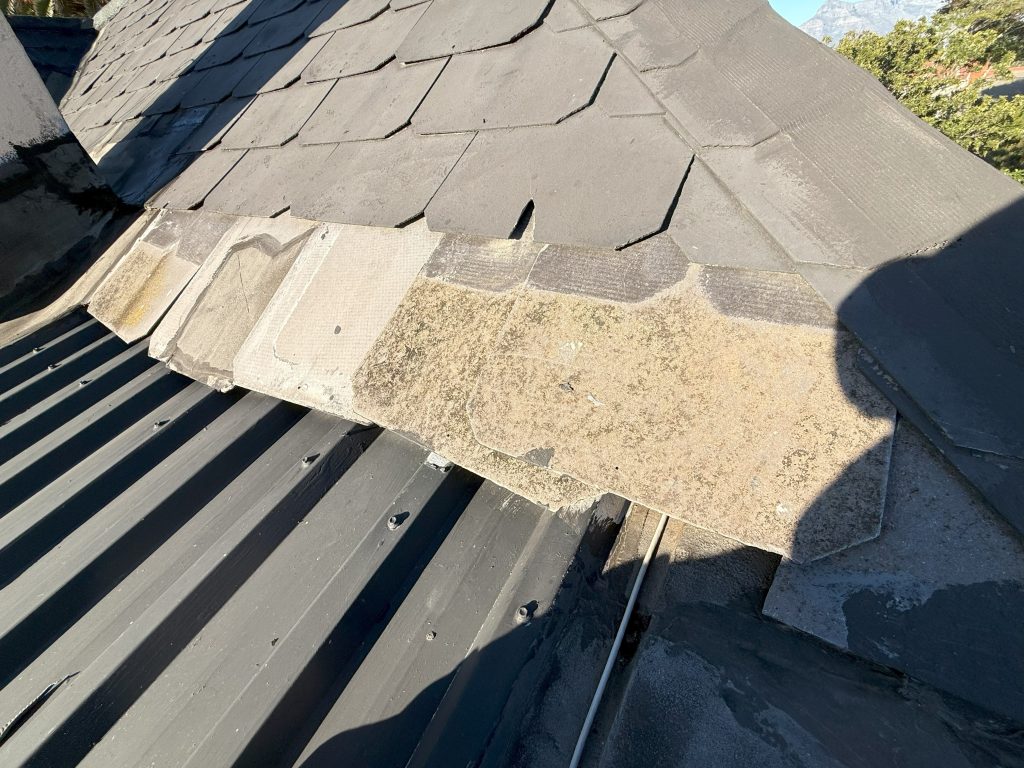
Our HeritageGuard system enables partial removal of single-pitched asbestos roof sections while leaving the remaining asbestos completely undisturbed. This approach is specifically designed to comply with current regulations and is particularly valuable for historic buildings.
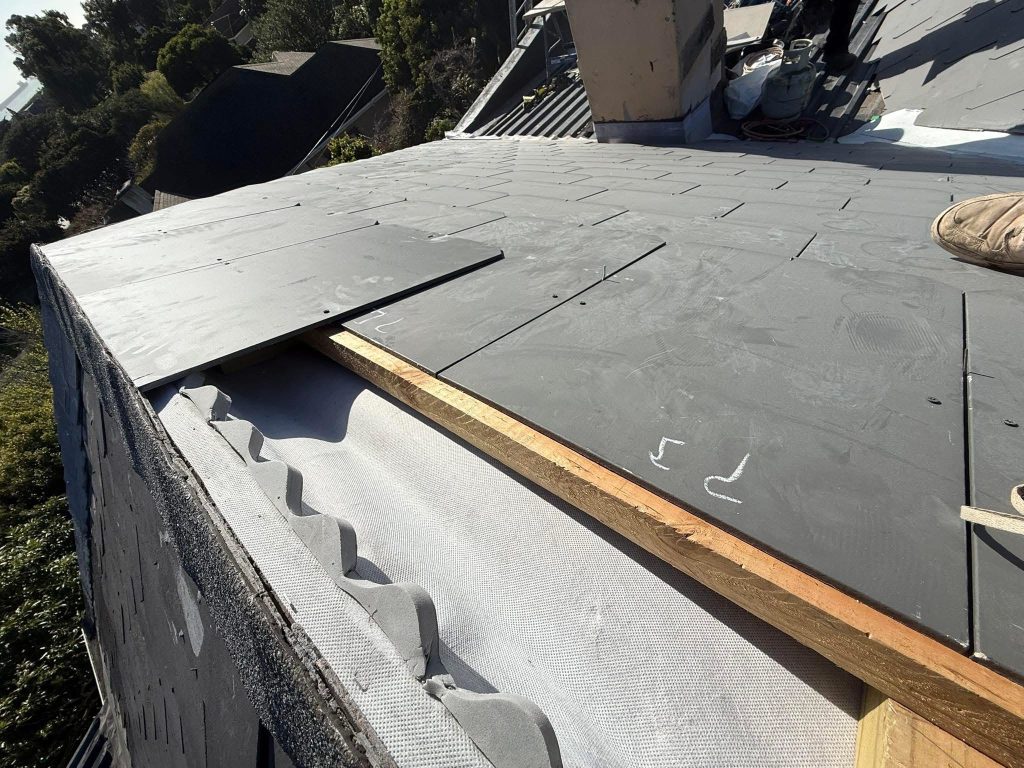
At the critical junction where the new roof meets the existing asbestos:
- No flashing is installed.
- The underlayment membrane is precisely detailed.
- Polybuttons (the same compressible foam closures normally used with corrugated sheeting) are fitted underneath the last row of tiles. These create a soft cushion that allows the new tiles to sit tightly while ensuring zero mechanical pressure or contact with the asbestos below.
Critical Compliance & Safety Features:
- No adhesives, sealants, fixings, or mechanical pressure applied to any asbestos material.
- No power tools were used on the roof during installation.
- All tile cutting was completed before materials were taken onto the roof.
- The remaining asbestos stays completely undisturbed throughout the process.
This method makes it possible to replace only the necessary sections while preserving the original asbestos roof on the untouched areas – delivering a weather-tight, regulation-compliant result.
HERITAGE CONSIDERATIONS FOR OLDER PROPERTIES
Heritage Considerations for Buildings Predating 60 Years
If a building is older than 60 years, Section 34 of the National Heritage Resources Act (NHRA) becomes relevant:
“No person may alter or demolish a structure older than 60 years without a permit from the relevant heritage authority.”
In the Western Cape, this authority is Heritage Western Cape (HWC).
Key implications for roof work:
- Alterations that affect the building’s external form or structure (including structural roof changes) may require heritage review and approval.
- The age of the structure is generally measured from the original building, not from later alterations (e.g., 1988 works do not reset the clock).
- A building older than 60 years is not automatically considered historically significant, but once the age threshold is triggered, procedural review may still apply.
How HeritageGuard supports heritage-sensitive projects
By enabling partial replacement rather than full roof removal, and by avoiding major structural interventions or visible flashing at junctions, the HeritageGuard method minimises changes to the building’s external appearance and fabric. This can be particularly advantageous for properties in areas such as Clifton and Glen Beach, where preserving the original roof character is important.
Note: Heritage permit requirements depend on the specific property, its significance, and the exact scope of work. We always recommend early consultation with Heritage Western Cape or a qualified heritage practitioner for properties that may fall under Section 34.
SYSTEM BENEFITS
System Benefits Delivered
- Cost-effective — significantly lower cost than full asbestos removal and replacement
- Heritage-friendly — preserves original roof appearance on untouched sections; ideal for historic bungalows and older properties in Clifton, Glen Beach and similar areas
- Fully compliant with Asbestos Abatement Regulations 2020 (Regulation 24(j))
- Zero disturbance to remaining asbestos — no contact, adhesives or mechanical pressure
- Future-proof — adjacent sections can be maintained or replaced later without risk to the new work
- Comprehensive workmanship and manufacturing guarantee
- Seamless visual integration with the existing ro
ACKNOWLEDGEMENTS
With Special Thanks To
Our valued client for entrusting us with this sensitive project, the Laboratory Team for their precise analysis and support, our certified contractors, AIA (OHMS) for rigorous independent monitoring, and our suppliers for supplying high-performance roofing materials.
HeritageGuard — A non-contact, partial-replacement roofing system developed by Daniel Kniess of The German Roofer for safe, regulation-compliant work on asbestos roofs.
Need a Sensitive, Cost-Effective Solution for an Older Asbestos Roof?
Whether you have a historic bungalow in Clifton or Glen Beach, or any property where full asbestos removal is impractical or undesirable, the HeritageGuard method offers a compliant, lower-impact alternativ
Disclaimer
The information on this page, including the HeritageGuard method and project summary, is provided for general informational purposes only and does not constitute legal, regulatory, or professional advice.
• The HeritageGuard partial roof replacement system is designed to comply with the Asbestos Abatement Regulations, 2020 (specifically Regulation 24(j)) by avoiding any disturbance, contact, adhesives, or mechanical fixing to remaining asbestos-containing materials. However, every property is different. A site-specific assessment by a qualified Approved Asbestos Inspection Authority (AIA) or competent person is always recommended.
• For buildings older than 60 years, Section 34 of the National Heritage Resources Act (NHRA) may apply. Works that alter the external form or structure (including roof replacements) may require a permit from Heritage Western Cape (HWC). The age of a structure is generally measured from the original construction date. This page does not confirm whether your property falls under heritage provisions — we strongly advise early consultation with Heritage Western Cape or a registered heritage practitioner.
• The German Roofer (Daniel Kniess) is not a registered asbestos removal contractor. The HeritageGuard method is specifically engineered to keep the work outside the scope of regulated “asbestos work”. This does not guarantee acceptance by all authorities or for every property.
• All compliance, heritage, and structural requirements are property-specific. We recommend obtaining independent professional advice before any work begins.
• While every effort is made to deliver compliant, high-quality work, The German Roofer accepts no liability for decisions made solely on the basis of the information on this page. Guarantees are subject to our standard terms and conditions and a full site assessment.